
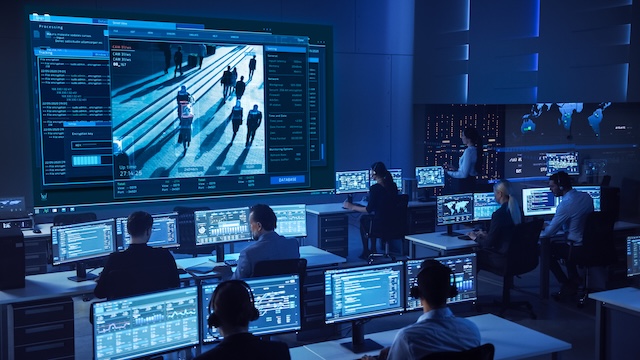
Curated threat intelligence refers to the collection, refinement, validation, and contextualization of raw threat data into actionable intelligence tailored to the needs of an organization’s cybersecurity operations. Unlike raw or unfiltered threat feeds, curated intelligence provides high-confidence, relevant, and timely insights that directly support detection, prevention, and response activities across the security operations lifecycle.

This intelligence is indispensable for cybersecurity teams charged with defending complex enterprise environments against advanced persistent threats (APTs), commodity malware, insider threats, and supply chain compromises. For security leaders and analysts operating within Fortune 1000 companies, curated threat intelligence helps prioritize threats, reduce alert fatigue, improve time-to-detection, and align defensive strategies with the organization’s risk appetite.
The Role of Curated Threat Intelligence in Security Operations
Curated threat intelligence enhances cybersecurity operations by transforming raw threat data into high-fidelity, actionable intelligence. It enables SOCs, threat hunters, and security leadership to prioritize threats, streamline detection, and accelerate response within complex enterprise environments.
- Enhances Detection and Response Capabilities: Curated intelligence feeds enrich SIEM, SOAR, and EDR tools with validated indicators of compromise (IOCs), adversary TTPs, and contextual metadata. This intelligence enables more accurate alert correlation, detection of lateral movement, and faster containment of threats across endpoints, networks, and cloud services.
- Reduces Operational Noise and Alert Fatigue: By filtering out low-confidence or irrelevant data, curated feeds improve the signal-to-noise ratio. SOC analysts benefit from fewer false positives and can focus on high-confidence threats aligned with the organization’s threat profile, improving triage efficiency and reducing mean time to detect (MTTD).
- Supports Threat Prioritization and Risk Alignment: Curated intelligence is tailored by sector, geography, and threat actor behavior, allowing security teams to align detection rules and mitigation efforts with the most relevant threats. This targeted approach strengthens risk-based decision-making and resource allocation.
Curated threat intelligence is essential for scalable, proactive defense. It provides the precision and context needed to identify, prioritize, and respond to evolving threats in real time, making it a critical asset for enterprise-grade cybersecurity operations.
Key Characteristics of Curated Threat Intelligence
Curated threat intelligence is defined by the quality, precision, and contextual relevance of the threat data it delivers. These attributes are critical for operationalizing intelligence across detection, prevention, and response functions in enterprise environments.
- Contextualized and Operationally Relevant: Effective curation enriches raw indicators with metadata, including threat actor attribution, campaign linkage, attack motivation, and MITRE ATT&CK mapping. This context allows SOC teams to understand not just what the threat is, but why it matters, how it behaves, and where it fits into the broader threat landscape—enabling threat modeling and more precise detection engineering.
- Validated and De-duplicated for Accuracy: Curation processes involve cross-verifying IOCs across multiple trusted sources, threat research, and automated analysis environments. This validation reduces false positives, removes redundant indicators, and ensures high-confidence intelligence reaches production systems—avoiding alert overload and maintaining fidelity in detection pipelines.
- Timely and Prioritized for Actionability: Curated intelligence is ranked based on relevance to the organization’s sector, geolocation, and infrastructure. Prioritization helps security teams focus on threats that pose the most immediate or severe risks, ensuring that limited resources are directed where they’re most effective.
Curated threat intelligence delivers more than data—it provides structured, trusted insight tailored to operational needs. Its defining characteristics ensure that intelligence is not only technically accurate but also strategically aligned and actionable across the cybersecurity stack.
Strategic vs. Tactical Use of Curated Threat Intelligence
Curated threat intelligence delivers value across both strategic and tactical layers of cybersecurity. While tactical use supports day-to-day defense operations, strategic applications inform long-term planning, investment, and risk management.
- Tactical Use Supports Real-Time Detection and Response: At the operational level, curated intelligence feeds into SIEM, SOAR, and EDR systems to enrich alerts, drive automated playbooks, and support threat hunting. Indicators such as IP addresses, domain names, file hashes, and TTPs are directly applied to detection rules and response logic. This tactical use enables SOC analysts to triage incidents more effectively, reduce false positives, and respond to threats with speed and precision.
- Strategic Use Informs Risk Management and Security Architecture: At the strategic level, curated intelligence provides visibility into adversary behavior, campaign trends, and geopolitical threat drivers. This insight helps CISOs, CTI leads, and architects assess organizational risk exposure, prioritize control investments, and shape cyber resilience initiatives. Intelligence-driven strategies can guide vulnerability management, incident response readiness, and supply chain risk mitigation aligned with evolving threat landscapes.
Strategic and tactical uses of curated threat intelligence are complementary. Operational teams need high-fidelity data for immediate threat mitigation, while leadership relies on broader insights to make informed security decisions. Mature security programs integrate both to ensure agile, risk-aligned, and threat-informed defense.
Integrating Curated Threat Intelligence into An Enterprise Security Ecosystem
Integrating curated threat intelligence into an enterprise security ecosystem ensures that threat data is actionable, timely, and aligned with operational workflows. Effective integration maximizes the impact of intelligence across detection, response, and risk mitigation functions.
- SIEM and SOAR Integration Enables Correlation and Automation: Curated intelligence feeds enrich SIEM alerts with threat context, improving event correlation and prioritization. When paired with SOAR platforms, intelligence drives automated triage, enrichment, and response workflows. This integration reduces analyst workload, shortens investigation timelines, and enables faster containment of high-fidelity threats through playbook-driven actions.
- Endpoint and Network Control Integration Enables Preventive Defense: EDR, NDR, and firewall platforms ingest curated IOCs, TTPs, and signatures to enable real-time blocking and anomaly detection. By mapping intelligence to behavioral patterns, organizations can identify lateral movement, command-and-control activity, and malware execution early in the attack chain. This proactive approach enhances visibility across hybrid environments.
- TIP Integration Centralizes Management and Dissemination: Threat intelligence platforms (TIPs) act as central hubs for ingesting, normalizing, scoring, and distributing curated intelligence across security tools. They support de-duplication, threat scoring models, and integration via STIX/TAXII or RESTful APIs, ensuring consistent application of intelligence across use cases.
Tightly integrated curated threat intelligence improves detection precision, automates threat response, and aligns intelligence with both strategic objectives and operational demands—making it essential for resilient enterprise security architecture.
Sources and Providers of Curated Threat Intelligence
Curated threat intelligence is derived from multiple sources, each offering different levels of granularity, confidence, and contextual depth. Understanding these sources is essential for building a comprehensive intelligence program tailored to enterprise risk profiles.
- Commercial Intelligence Providers Offer High-Fidelity, Sector-Specific Data: Vendors such as Recorded Future, Mandiant, CrowdStrike, and Palo Alto Networks deliver curated intelligence enriched with attribution, campaign tracking, and infrastructure analysis. Their offerings often include real-time feeds, threat actor profiles, malware reverse engineering, and integration support for SIEM, SOAR, and TIP platforms. These providers focus on high-confidence, actionable intelligence aligned with vertical-specific threats and often provide SLA-backed services.
- ISACs, ISAOs, and Government Programs Provide Sector-Aligned Threat Sharing: Industry-specific Information Sharing and Analysis Centers (ISACs), Information Sharing and Analysis Organizations (ISAOs), and national programs such as CISA’s JCDC provide curated intelligence to critical infrastructure and regulated sectors. This intelligence often includes pre-publication indicators, collaborative analysis, and strategic advisories designed to improve cross-sector situational awareness and collective defense.
- Internal Threat Research Enhances Relevance and Customization: Organizations with mature CTI teams generate curated intelligence from internal sources, including incident response data, malware sandboxing, and honeypots. This intelligence reflects the enterprise’s specific threat landscape, infrastructure, and business context, making it highly relevant for detection engineering and risk modeling.
Blending commercial, community, and internal sources enables security teams to build a layered, resilient threat intelligence program. Each source contributes unique value, and their integration supports comprehensive visibility, improved detection fidelity, and targeted defense.
Curated Threat Intelligence’s Benefits for Enterprise-Scale Cybersecurity Teams
Curated threat intelligence provides enterprise-scale cybersecurity teams with the precision, context, and speed needed to defend against sophisticated threats. Its structured nature enhances decision-making across detection, response, and long-term risk reduction.
- Accelerates Detection and Reduces Dwell Time: High-confidence IOCs, correlated with adversary TTPs and campaign metadata, enable rapid triage and detection. Curated intelligence feeds directly into SIEM, EDR, and NDR platforms, enhancing alert fidelity and enabling faster identification of malicious activity across distributed environments.
- Improves SOC Efficiency and Analyst Productivity: By filtering out low-value indicators and enriching alerts with relevant context, curated intelligence reduces false positives and cognitive load. This improved efficiency allows Tier 1 and Tier 2 analysts to focus on high-priority incidents, increase triage throughput, and improve overall SOC effectiveness without scaling headcount in proportion.
- Enables Threat-Driven Risk Management: Strategic intelligence helps security leaders align investments with real threats by identifying attacker capabilities, campaign targets, and exploit trends. This threat-driven risk management supports threat-informed defense strategies, risk scoring, and resource allocation decisions that reflect the organization’s threat landscape and business priorities.
Curated threat intelligence enhances both operational and strategic security outcomes. For large enterprises, it ensures that security operations remain agile, threat-aware, and able to respond to dynamic adversarial tactics with clarity and speed.
Challenges and Considerations
While curated threat intelligence enhances detection and response, it also introduces operational, architectural, and strategic challenges. Effective implementation requires careful evaluation of data quality, integration methods, and organizational context.
- Integration Complexity and Ecosystem Alignment: Ingesting curated intelligence into SIEM, SOAR, TIP, and EDR platforms demands API compatibility, data normalization, and continuous parsing updates. Inconsistent formats, overlapping indicators, and taxonomy mismatches can hinder automation and require custom development for enrichment, scoring, and routing logic across tools.
- Overdependence on External Feeds: Relying solely on third-party intelligence may limit visibility into organization-specific threats and introduce blind spots. Without blending curated external data with internal telemetry—such as incident artifacts, IR logs, and attack simulations—teams risk applying generic detections that fail to reflect their actual threat surface or asset exposure.
- Trust Scoring and Relevance Evaluation: Providers use different models to score threat confidence, severity, and attribution, leading to inconsistent prioritization. Without rigorous vetting and normalization processes, teams may misclassify threats or deploy unreliable indicators, thereby degrading alert fidelity and consuming unnecessary resources.
Despite these challenges, curated threat intelligence remains a critical capability. Success depends on selecting trusted sources, ensuring platform interoperability, and aligning intelligence applications with the organization’s operational and strategic threat models.
Emerging Trends in Curated Threat Intelligence
Curated threat intelligence is evolving to address the scale, complexity, and velocity of modern cyber threats. Emerging trends focus on automation, contextual relevance, and deeper integration with adaptive security architectures.
- AI-Driven Curation and Threat Attribution: Machine learning models are increasingly used to score IOCs, correlate adversary infrastructure, and identify TTP patterns across large datasets. These systems reduce the time required to curate intelligence, enhance attribution accuracy, and uncover cross-campaign linkages that manual analysis might miss, enabling faster deployment of effective detections.
- Threat Intelligence-as-Code in DevSecOps Pipelines: Security teams are embedding curated intelligence into CI/CD workflows to detect known malicious components and insecure dependencies before deployment. This shift-left model integrates STIX/TAXII feeds and curated signatures directly into infrastructure-as-code (IaC) and container security tools, ensuring earlier visibility and preemptive hardening.
- Cloud-Native and Industry-Specific Intelligence: As enterprises adopt hybrid and multi-cloud environments, threat intelligence providers are producing cloud-focused intelligence that includes IAM abuse patterns, misconfigured services, and API exploitation techniques. Additionally, vertical-specific intelligence for sectors such as healthcare, energy, and finance enhances relevance and helps align defenses with sector-specific threat profiles.
These trends signal a move toward intelligence that is faster, more targeted, and embedded across the full security lifecycle. For enterprise defenders, embracing these innovations ensures curated threat intelligence remains actionable, scalable, and tightly coupled with dynamic risk environments.
Conclusion
For cybersecurity professionals defending high-value enterprise assets, curated threat intelligence is a cornerstone of modern defense-in-depth strategies. It bridges the gap between threat data and actionable insight, enabling faster, more accurate responses to real-world threats. As cyber adversaries evolve, so too must the methods for understanding, prioritizing, and responding to them. Curated intelligence provides the operational clarity, strategic foresight, and contextual depth needed to stay ahead.
Deepwatch® is the pioneer of AI- and human-driven cyber resilience. By combining AI, security data, intelligence, and human expertise, the Deepwatch Platform helps organizations reduce risk through early and precise threat detection and remediation. Ready to Become Cyber Resilient? Meet with our managed security experts to discuss your use cases, technology, and pain points, and learn how Deepwatch can help.
Related Content
- Move Beyond Detection and Response to Accelerate Cyber Resilience: This resource explores how security operations teams can evolve beyond reactive detection and response toward proactive, adaptive resilience strategies. It outlines methods to reduce dwell time, accelerate threat mitigation, and align SOC capabilities with business continuity goals.
- The Dawn of Collaborative Agentic AI in MDR: In this whitepaper, learn about the groundbreaking collaborative agentic AI ecosystem that is redefining managed detection and response services. Discover how the Deepwatch platform’s dual focus on both security operations (SOC) enhancement and customer experience ultimately drives proactive defense strategies that align with organizational goals.
- 2024 Deepwatch Adversary Tactics & Intelligence Annual Threat Report: The 2024 threat report offers an in-depth analysis of evolving adversary tactics, including keylogging, credential theft, and the use of remote access tools. It provides actionable intelligence, MITRE ATT&CK mapping, and insights into the behaviors of threat actors targeting enterprise networks.